


Overview
Research
Overview
Research
Research Platform
The Program’s research portfolio builds on Harvard’s world-class faculty in international humanitarian law (IHL)/law of armed conflict (LOAC), international criminal law, international human rights law, jus ad bellum, and other fields of international law related to armed conflict. We also consult with other scholars in the U.S. and abroad, diplomats, UN actors, humanitarian leaders, and military officials to better understand where research can help enrich and expand discussions and debates.
Connection with the Harvard Law School Library
We work closely with the Harvard Law School Library—including Jennifer Allison, who maintains a library research guide for the Program—to maximize our use of the university’s unparalleled information and library resources.
Issues We Explore
Issues We Explore


Projects
Projects
Featured Projects

States spend tens of billions of dollars each year to help implement humanitarian programs in conflicts across the world. Yet, in practice, counterterrorism objectives increasingly prevail over humanitarian concerns, often resulting in devastating effects for civilian populations in need of aid and protection in war. Not least, confusion and misapprehensions about the power and authority of States relative to the United Nations Security Council to set policy preferences and configure legal obligations contribute significantly to this trajectory. In a guide for States, HLS PILAC authors argue that it is possible — and, they believe, urgently called for — to arrest this trajectory and safeguard principled humanitarian action. In their view, short-term and ad-hoc solutions are less likely to uphold the humanitarian imperative. Instead, the authors present a framework for States to reconfigure the relations between these core commitments by deciding to assess the counterterrorism architecture through the lens of impartial humanitarianism. The authors also identify key questions that States may answer to help formulate and instantiate their values, policy commitments, and legal positions in order to advance the humanitarian imperative and uphold respect for principled humanitarian action in connection with carrying out the Security Council’s counterterrorism decisions. Image credit: UN Photo/Eskinder Debebe.

This project seeks to strengthen international debate and inform policy-making on the ways that artificial intelligence and complex computer algorithms are transforming — and have the potential to reshape — war, as well as how international legal and policy frameworks already govern — and might further regulate — the design, development, and use of those technologies. Several states are actively seeking to harness artificial-intelligence techniques and other complex algorithmic systems in connection with war — not only for weapons but also for an array of other areas as well, such as detention, warships, and humanitarian services. Many of these technological developments threaten to outpace regulations. We will conduct research and convene government experts and international policymakers on rapid technological advancements with a focus on legal and policy dimensions of how AI techniques and other complex algorithmic systems are transforming war. Image credits: The U.S. Army [link] and Michael J. Vrabel [link].

In a paper by the Harvard Law School Program on International Law and Armed Conflict (HLS PILAC) titled “Quantum of Silence: Inaction and Jus ad Bellum” (2019), Dustin A. Lewis, Naz K. Modirzadeh, and Gabriella Blum examine the actual and potential roles of silence in the identification and the development of international law, with a focus on the legal regime governing the threat or use of force in international relations. The analysis in the paper is complemented with an annex — to which a team of HLS PILAC research assistants contributed — that contains the most comprehensive catalogue to date of apparent self-defense reports to the Security Council under article 51 of the U.N. Charter. Those contributors were Lindsay Anne Bailey, Emma Broches, Laura Clark, Sonia Chakrabarty, Thejasa Jayachandran, Daniel Levine-Spound, Sarah Libowsky, Samantha Lint, Yang Liu, Carolina Silva-Portero, Shira Shamir, William Ossoff, Tamsin Parzen, and Shanelle Van. Image credit: UN Photo/Rick Bajornas.

In developing international humanitarian law (IHL), States have aimed in part to lay down the primary normative and operational framework pertaining to principled humanitarian action in situations of armed conflict. The possibility that certain counterterrorism measures may be instituted in a manner that intentionally or unintentionally impedes such action has been recognized by an increasingly wide array of States and entities, including the United Nations Security Council and the U.N. Secretary-General. At least two aspects of the contemporary international discourse on intersections between principled humanitarian action and counterterrorism measures warrant more sustained attention. The first concerns who is, and who ought to be, in a position to authentically and authoritatively interpret and apply IHL in this area. The second concerns the relationships between IHL and other possibly relevant regulatory frameworks, including counterterrorism mandates flowing from decisions of the U.N. Security Council. Partly in relation to those two axes of the broader international discourse, a debate has emerged regarding whether the U.N. Security Council may authorize one particular counterterrorism entity — namely, the Counter-Terrorism Committee Executive Directorate (CTED) — to interpret and assess compliance with IHL pertaining to humanitarian action in relation to certain counterterrorism contexts.

In 2019, the United Nations Security Council urged States take into account the potential effects of counterterrorism measures on exclusively humanitarian activities, including medical activities, that are carried out by impartial humanitarian actors in a manner consistent with international humanitarian law (IHL). HLS PILAC is developing an analytical framework through which States may seek to devise and administer such “take into account” systems. The framework is grounded in respect for international law, notably IHL and counterterrorism obligations entailed in Security Council decisions. Image credit: UN Photo/Eskinder Debebe.
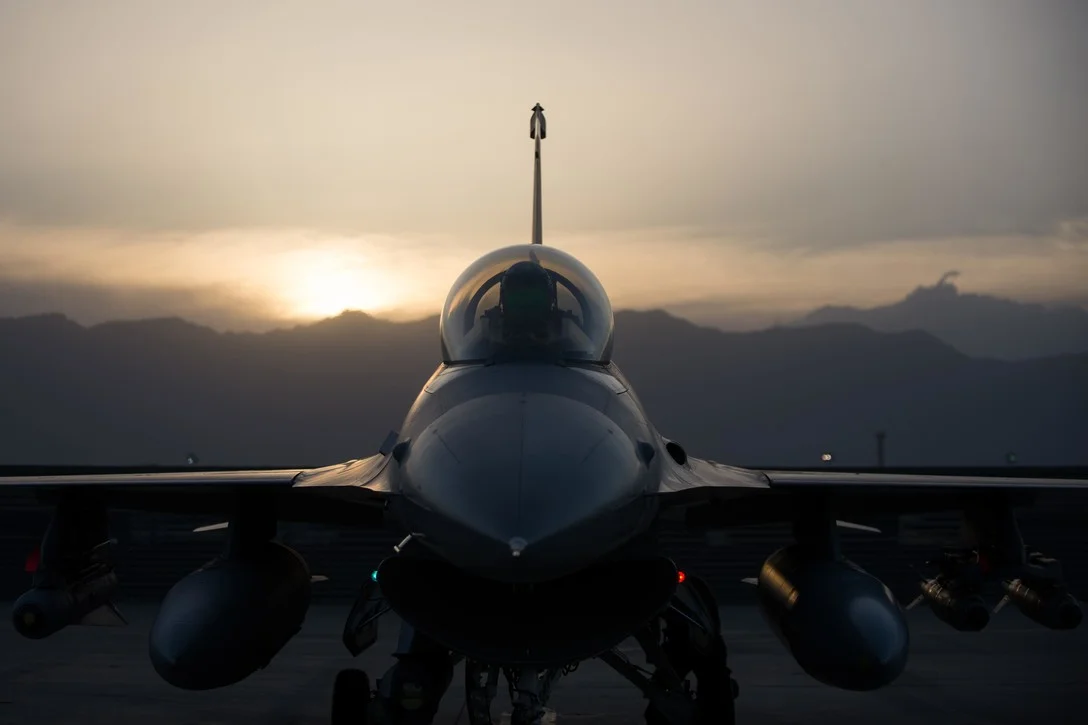
Can we say, definitively, when an armed conflict no longer exists under international law? The short, unsatisfying answer is sometimes: it is clear when some conflicts terminate as a matter of international law, but a decisive determination eludes many others. Indefinite War: Unsettled International Law on the End of Armed Conflict (February 2017) details the legal considerations and analyzes the significant implications of that lack of settled guidance. In all, our analysis reveals that international law, as it now stands, provides insufficient guidance to precisely discern the end of many armed conflicts as a factual matter(when has the war ended?), as a normative matter (when should the war end?), and as a legal matter (when does the international-legal framework of armed conflict cease to apply in relation to the war?). The current plurality of legal concepts of armed conflict, the sparsity of IHL provisions that instruct the end of application, and the inconsistency among such provisions thwart uniform regulation and frustrate the formulation of a comprehensive notion of when wars can, should, and do end. Image credit: U.S. Air Force photo/Tech. Sgt. Joseph Swafford.

HLS PILAC is contributing independent legal research and policy analysis, through the provision of HLS students’ research assistance, to the project titled “Council of Advisers on the Application of the Rome Statute to Cyberwarfare.” The initiative — which enjoys the support of Liechtenstein, Spain, Belgium, and Estonia and which is slated to span fall 2019 through spring 2020 — aims in part to facilitate a time-bound forum for States, academics, and civil society members to discuss how different forms of cyber operations fit into the Rome Statute system and other international legal frameworks. Image credit: DARPA.


To help determine the measurable impact of counterterrorism laws on humanitarian action, the Counterterrorism and Humanitarian Engagement (CHE) Project at the Harvard Law School Program on International Law and Armed Conflict collected data from humanitarian actors demonstrating the impact (or lack thereof) of counterterrorism laws and regulations on humanitarian organizations and their work. The Pilot Empirical Survey Study on the Impact of Counterterrorism Measures on Humanitarian Action (by Jessica S. Burniske and Naz K. Modirzadeh, March 2017) captures the resulting initial attempt at a pilot empirical study in this domain. Modirzadeh wrote a Comment on the Study (March 2017). That Comment raises considerations for states and donors, for humanitarian organizations, and for researchers. Image credit: DFID.

In this project, we introduce a new concept—war algorithms—that attempts to elevate algorithmically-derived “choices” and “decisions” to a, and perhaps the, central concern regarding technical autonomy in war. We define “war algorithm” as any algorithm that is expressed in computer code, that is effectuated through a constructed system, and that is capable of operating in relation to armed conflict. In introducing this concept, our foundational technological concern is the capability of a constructed system, without further human intervention, to help make and effectuate a “decision” or “choice” of a war algorithm. Distilled, the two core ingredients are an algorithm expressed in computer code and a suitably capable constructed system. Through that lens, we link international law and related accountability architectures to relevant technologies. We sketch a three-part (non-exhaustive) approach that highlights traditional and unconventional accountability avenues. Photo credit: Christiaan Colen (Flickr)

This one-session case study zooms in on one of the pivotal decision points in contemporary partnered armed conflicts: whether or not to share intelligence with a partner. With a focus on managing legal responsibility and protecting civilians, participants are primed to quickly weigh countervailing considerations, navigate interoperability challenges, and make strategic decisions in high-pressure, time-sensitive, complex operations involving several States and non-state armed groups. Image credit: Image credit: U.S. Air Force photo/ Tech. Sgt. Nadine Y. Barclay [link].

The surge in armed conflicts involving terrorism has brought to the fore the general question of medical care in armed conflict and the particular legal protections afforded to those providing such care to terrorists. Against this background, we evaluate international humanitarian law (IHL) protections for wartime medical assistance concerning terrorists. Through that lens, we expose gaps and weaknesses in IHL. We also examine tensions between IHL and state responses to terrorism more broadly. Photo credit: Army Medicine (Flickr).

HLS PILAC grows out of and expands upon the Counterterrorism and Humanitarian Engagement Project (CHE Project) of the HLS-Brookings Project on Law and Security. With generous support from the Swiss FDFA, as well as project support from the Norwegian Ministry of Foreign Affairs facilitated through the Norwegian Refugee Council, the CHE Project produces independent research and analysis on emerging challenges of humanitarian protection in situations of armed conflict where listed armed groups control territory. Photo credit: U.N. Photo/Stuart Price (Flickr).

Our June 2017 briefing report with annexes provides an overview of research conducted by HLS PILAC concerning modalities in which the U.N. Security Council and the U.N. General Assembly have addressed ANSAs with respect to human rights; ways in which these U.N. principal organs have distinguished between different types of ANSAs; and the consequences of these organs possibly establishing responsibility of ANSAs in relation to the protection and fulfillment—or, at least, the non-abuse—of human rights. While it is incontrovertible that the U.N. Security Council and the U.N. General Assembly have recognized, at a minimum, that the conduct of at least some ANSAs can amount to violations or abuses of human rights, it is not currently possible to state that either of these principal U.N. organs has taken sufficient steps to formally endow ANSAs with human-rights obligations in general under international law. Image credit: UN Photo/Mark Garten [link], Dec. 4, 2000.

The number, range, and scope of intergovernmental entities and initiatives with a counterterrorism component have grown significantly in recent years. Today, a web of counterterrorism laws, policies, and enforcement approaches is developed and overseen by over 70 international institutions, bodies, and networks around the world. These efforts focus on everything from promulgating international legal rules to developing global policy standards, from drafting model criminal laws to promoting intelligence- and information-sharing. To date, the full scope of these efforts has not, to our knowledge, been captured in one place. We set out to identify and summarize these efforts in a single online resource. Photo credit: U.S. Army (Flickr)