Events
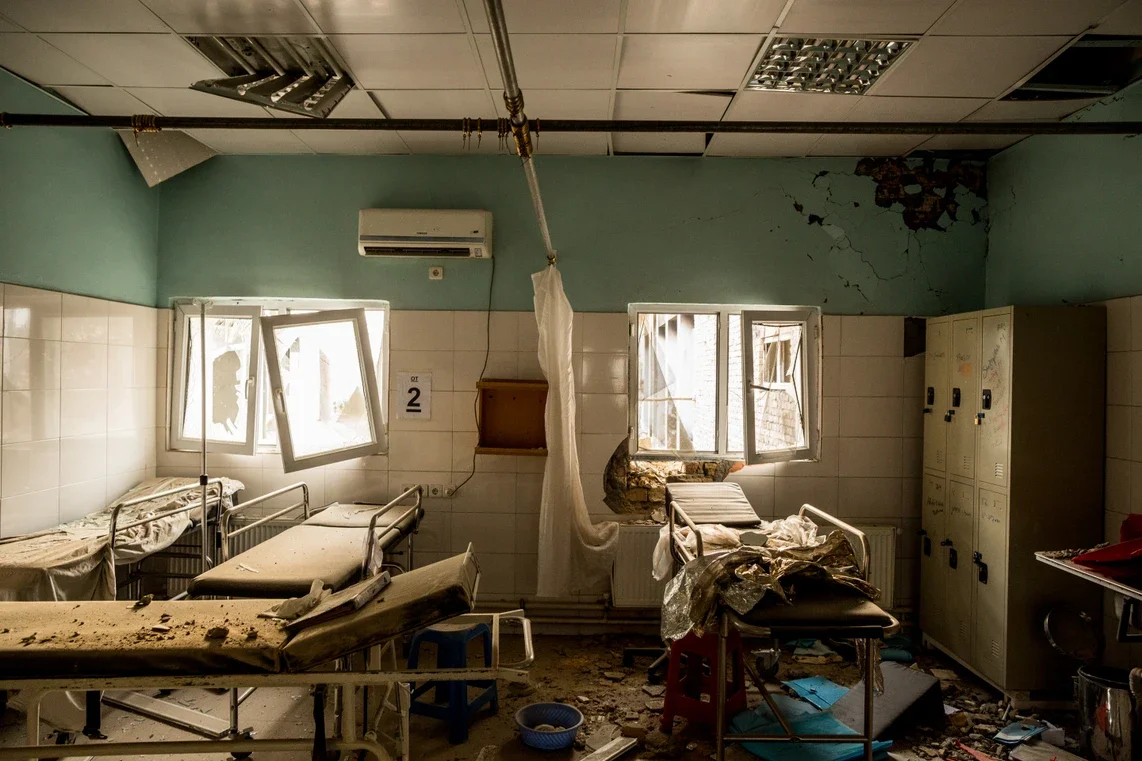
The Ministry of Foreign Affairs of Denmark, the Danish Red Cross, Doctors without Borders Denmark and DanChurchAid, is co-organising an event to highlight the urgent need to protect healthcare in armed conflict, and explore practical measures to do so through expert insights and panel discussion. Image credit: MSF.
This webinar brings together scholars, practitioners, and humanitarian actors to examine the evolving relationship between sanctions regimes, counter-terrorism measures, and humanitarian action in contemporary armed conflicts.
UN Security Council Arria‑Formula Meeting organized by Denmark, New Zealand and Spain. To provide an informal space for the Security Council and the wider UN membership to reflect on the implementation of the resolution, key developments, and emergent threats and opportunities to the protection of medical mission in armed conflict since 2016.
HLS PILAC’s Research Director, Dustin A. Lewis, participated in an expert exchange on “Legal Review of Weapons in the Context of Decentralized Development, Acquisition, Deployment, and Modification” convened by the International Committee of the Red Cross (ICRC) in Kyiv on 15 April 2026.
HLS PILAC’s Research Director participated in the Regional Consultation for Latin America and the Caribbean on Upholding International Humanitarian Law in the Use of Information and Communication Technologies During Armed Conflicts.
In this lecture, Prof. Michael N. Schmitt (of the University of Reading and an HLS PILAC affiliate) will examine selected United States uses of force during the second Trump administration through the lens of international law.
HLS PILAC’s Research Director participated in the Greentree Retreat on International Humanitarian Law, “Ten Years after Resolution 2286: Renewing Commitment to the Protection of Health Care in Armed Conflict under IHL,” convened by the Permanent Mission of Spain to the United Nations in New York.
This side event — co-organized by Harvard Law School’s Program on International Law and Armed Conflict and the Government of Switzerland — will examine how international law, in particular international humanitarian law (IHL), applies to the development and use of artificial intelligence in armed conflicts.
In this lecture, Commodore Ian Park (Ph.D.) will examine the significance and certain legal challenges pertaining to critical undersea infrastructure.
On 15–17 May 2025, a workshop will be convened in Geneva on “How and Why Do Double Standards Matter for International Law?”
On April 1–2, 2025, HLS PILAC, the ICRC, and the Lieber Institute co-convened a workshop at Harvard Law School.
In this talk, Ian Park, PhD, will identify and examine select aspects concerning the likelihood of a major global war, the role in international law in current conflicts, and the prospect of a lasting peace.
In this presentation, Prof. Ingvild Bode and Dr. Anna Nadibaidze will examine select global practices of developing, training personnel for, and using military systems integrating AI and autonomous technologies, covering some of these practices, their normative implications, and potential ways forward in addressing these challenges via governance frameworks.
On July 15–16, 2024, HLS PILAC is co-sponsoring — with the Berlin Potsdam Research Group “The International Rule of Law - Rise or Decline?” — a workshop titled “Double Standards and International Law.”
This lecture, by HLS PILAC’s Research Director, will seek to frame, identify, and evaluate certain key settled and open legal questions regarding natural and artificial intelligence in armed conflict.
The Permanent Mission of Switzerland to the UN, in partnership with IPI, the Permanent Mission of the Republic of Mozambique to the UN, the Permanent Mission of the United Kingdom to the UN, the United Nations Office for the Coordination of Humanitarian Affairs (OCHA), the International Committee of the Red Cross (ICRC), and the Norwegian Refugee Council (NRC), hosted a policy forum on May 20th on “25 Years of POC and the UN Security Council: Challenges and Opportunities.”
In this lecture, Prof. Ntina Tzouvala will explore how can we understand international law’s permissiveness vis-a-vis the vast economic and financial infrastructure of modern warfare.
HLS PILAC will host a working-papers series lunch with Klaudia Klonowska, a PhD Candidate in International Law at the Asser Institute/University of Amsterdam, to discuss her draft chapter titled “The Mirage of the Common Operational Picture: Unpacking How Military Actors See with Algorithms.”
This workshop aimed to explore select issues pertaining to the changing contexts, implementation, and enduring relevance concerning the Geneva Conventions of 1949.
In this lecture, Jelena Pejic will discuss certain key challenges and opportunities, from a practitioner’s perspective, relating to upholding respect for international humanitarian law.
How can international humanitarian legal protections better protect members of historically marginalized groups? Law and policy experts will discuss opportunities and challenges in this space.
On Sept. 28–29, 2023, a workshop on “Political Economy and the International Laws of Violence” will take place at the Freie Universität Berlin. Image credit: Kirsty McWhirter, Flickr (CC BY-NC-ND 2.0).
On March 23–24, HLS PILAC, the ICRC, and the Lieber Institute will convene a private workshop at Harvard Law School titled “Legal Roles and Responsibilities concerning Large-Scale Combat Operations.”
A crash course in International Human Rights and Humanitarian Law sponsored by HLS Advocates for Human Rights.
A webinar on the UN Security Council’s approach to humanitarian action, with HLS PILAC Founding Director Naz K. Modirzadeh as a guest speaker.
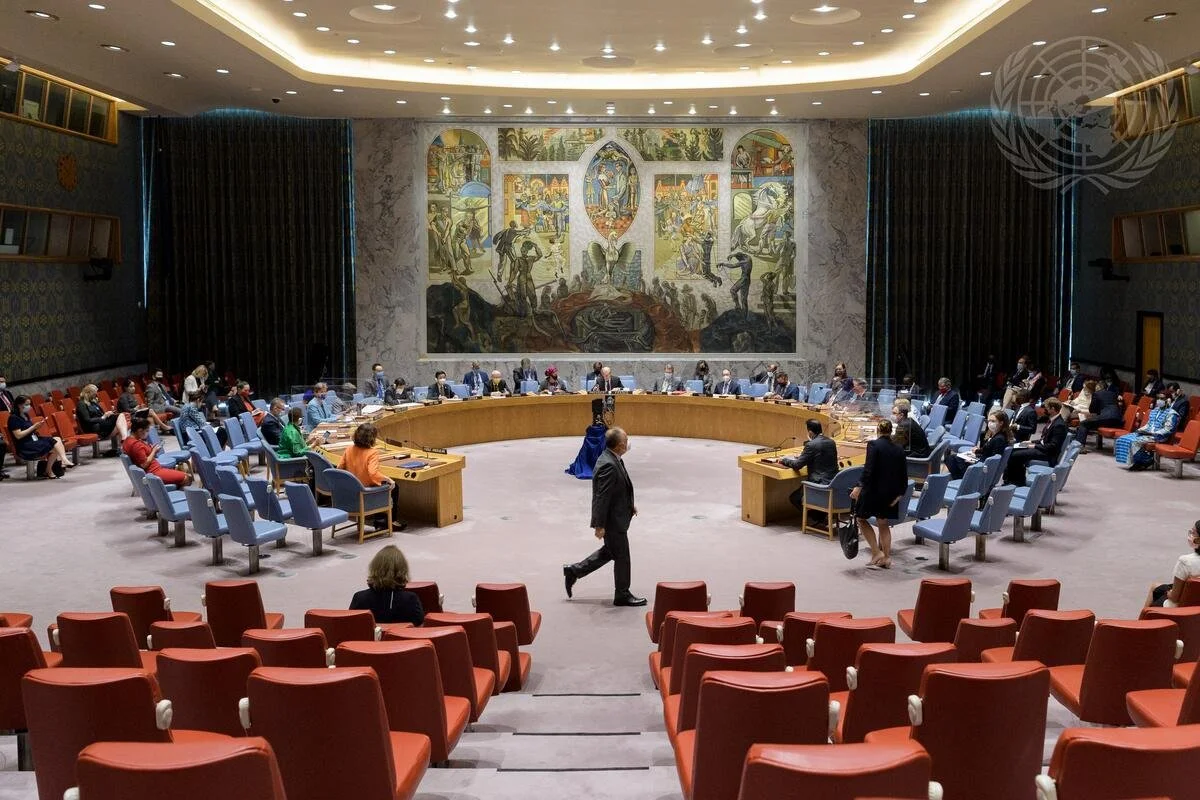
Image credit: UN Photo/Manuel Elías
On March 31–April 1, HLS PILAC, the ICRC, and the Lieber Institute will convene a workshop on International Law Applicable to Urban Siege Warfare. Image credit: ICRC (Yemen).
In this lecture, Dr. Danae Azaria will argue that a distinction can be drawn in international law between on the one hand State silence that speaks, and on the other hand rules on presumptions about the state of mind of a State drawn from the fact of State silence.
A discussion with Professor Len Rubenstein about this now book, Perilous Medicine: The Struggle to Protect Health Care from the Violence of War.